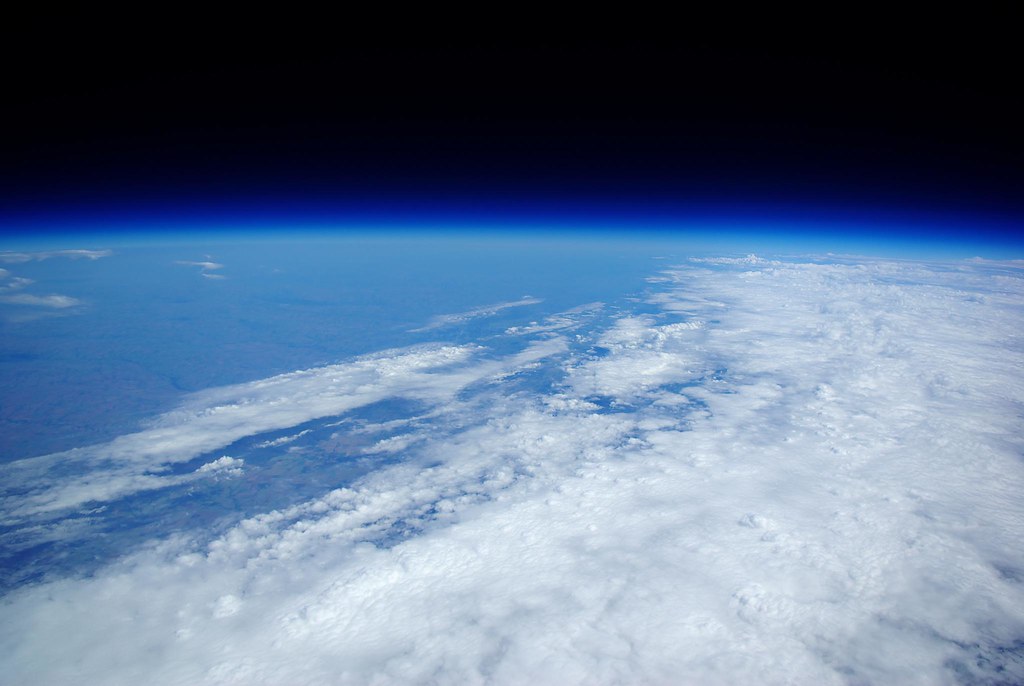
Thanks for the comments. I chose the k10d for the photographic payload system on an experiment by Oklahoma State University to measure cosmic radiation with a new sensor.
The payloads are attached to a sounding balloon which climbs to over 100,000 ft. The balloon is tracked with GPS telemetry systems. When the balloon is launched, it is about 12 ft. in diameter. At peak altitude it is between 40-50 ft. in diameter before burst (or commanded cut-down).
The results are a testament to the quality and ruggedness of the Pentax gear. The camera was exposed to the harshness of the space environment (essentially a vacuum, and below -60F temperatures) and it never missed a beat. The only protection for the camera was a foam box which really doesn't protect it from the pressure changes or cold (there were no heaters on board) The box primarily protects the camera on impact since the payloads hit the ground at about 22mph.
As I mentioned, the camera took well over 300 pictures. In fact, I went back and counted and the actual number is 563. All in PEF RAW format. The only ones that are unuseable are the ones after the camera landed. Since the camera and lens were so cold from the extreme altitude, condensation started forming on the lens shortly before landing. (It was a very humid day here since it rained the day before) The camera and lens were soaked with condensation, but kept happily fireing away with no problems other than you couldnt see through the water on the lens. By that point, there was nothing left to see.
Now as to exposure; the camera performed better than my wildest dreams. We put it in Tv mode at 1/3000 to freeze motion (since the ride is quite violent at times). Auto ISO, and multi-segment metering. Out of those hundreds of photos, there are maybe 5 or 6 that were overexposed when the camera was facing the sun. The biggest "problem" is that we have too many good photos!
We will eventually post all the photos, but we have to process them for the website (which is under construction). In the meantime, I posted some of the photos of the fight on my Flickr site. (Please excuse the single C@non shot on the site which was taken by a colleague while we were launching

) There are descriptions under each picture so you can follow the process. These are only a very small fraction, but you can at least follow the general process:
ASTRO-09 - a set on Flickr 




 Originally posted by Mike Cash


 Post #1 by PentaxPoke
 Similar Threads


