Pentax Camera Forums Home
 
Reply
Show Printable Version Search this Thread
  #1
butterflies with a 200mm 1:1 macro
Lens: 200mm 1:1 macro Camera: Pentax K-7 Photo Location: my garden ISO: 400 Shutter Speed: 1/180s Aperture: F11 
Posted By: Douglas_of_Sweden, 08-02-2010, 08:53 PM

Some time ago I finally got hold of a 200mm 1:1 macro, something I've been looking for for some time to get eough reach for shy bugs with wings. Still somewhere in the lower part of the learning curve.

Some are with a ring flash, some in natural light. Most of them at 400 ISO and f11 (those with the flash at 1/180s). All hand held. Have tried to use a monopod, but that is one thing too much to controle when trying to sneak up to the butterflies. Post processed in lightroom 2.7 with modest and various ampunts of contrast increase (mainly on some flash shots), sometimes minor sharpening, no noice reduction, no color change. Most shots have been cropped to some degree. Even with 200mm it is often hard to get close enough for 1:1.

Believe the first one is called "small tortoiseshell" in English (nässelfjäril på Svenska).

#1 Feeding through its snabel on an oregano flower

#2 Sunbathing?


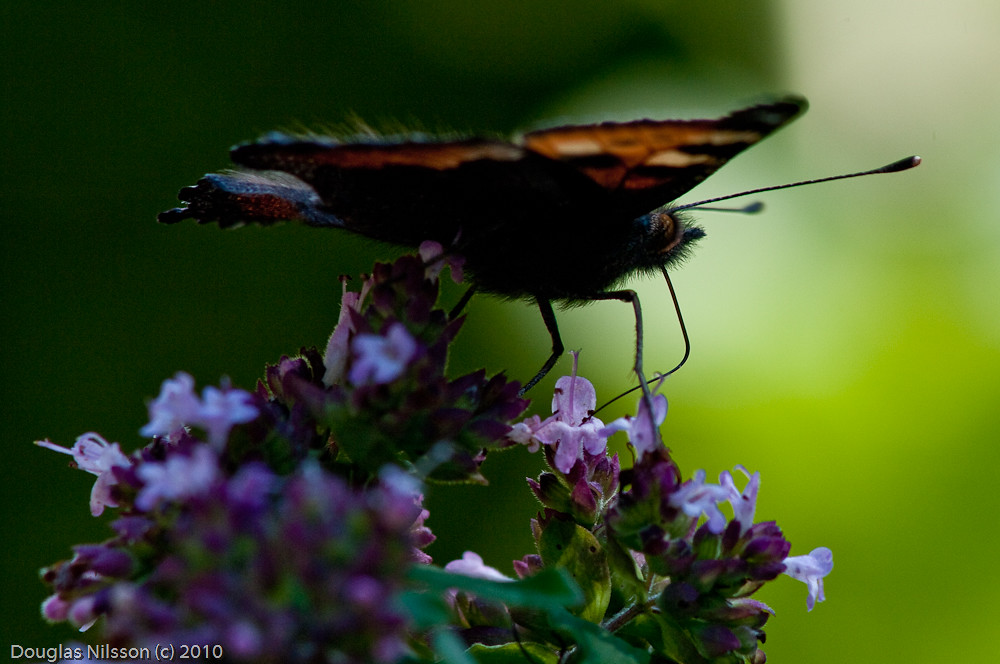
#3 From below with flash
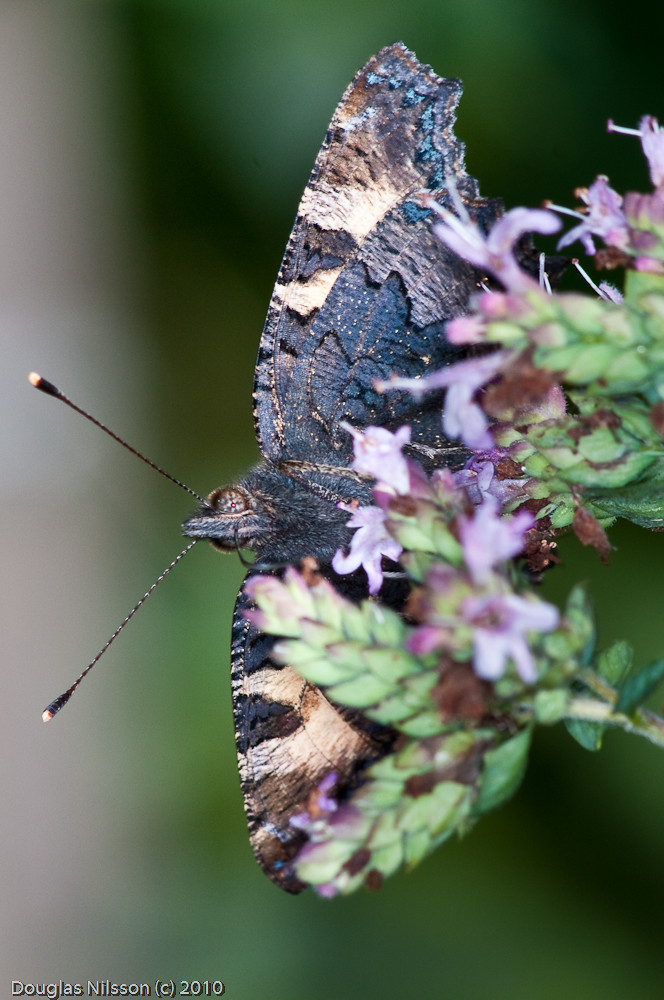

#4 From below without flash


Actually, #3 and 4 are shot with me, the camera and the butterfly in exactly the same possition. It just so happened that I cropped them differently. Didn't realise until afterward the postprocessing that they were an interresting comparison. They visualise a typical pattern: with flash it is easier to get a sharp shot, but while #4 isn't as sharp as #3, it has far more natural colors. Flash sometimes give dissapointing colors and contrast. However, it appears to me that the underside of the wings of some butterflies reflects the flash light in such a way that this gets a far worse problem than usual. They appear much brighter than they are in real life compared to other surfaces in the picture, and pale in color.

#5 Feeding on oregano again, now with the inner (upper?) side of one wing visible
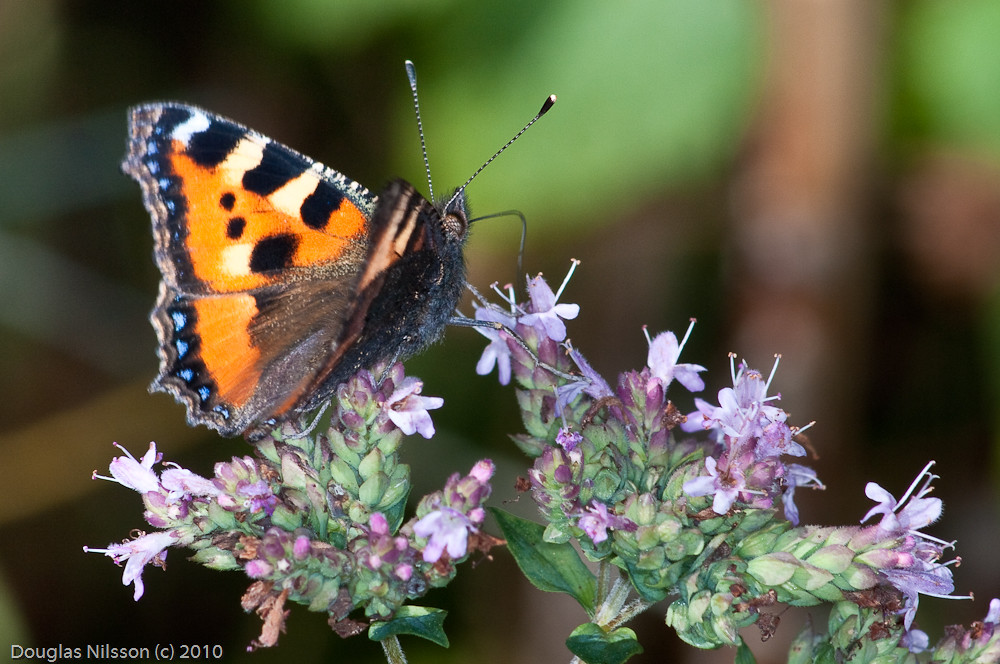

#6 Feeding again
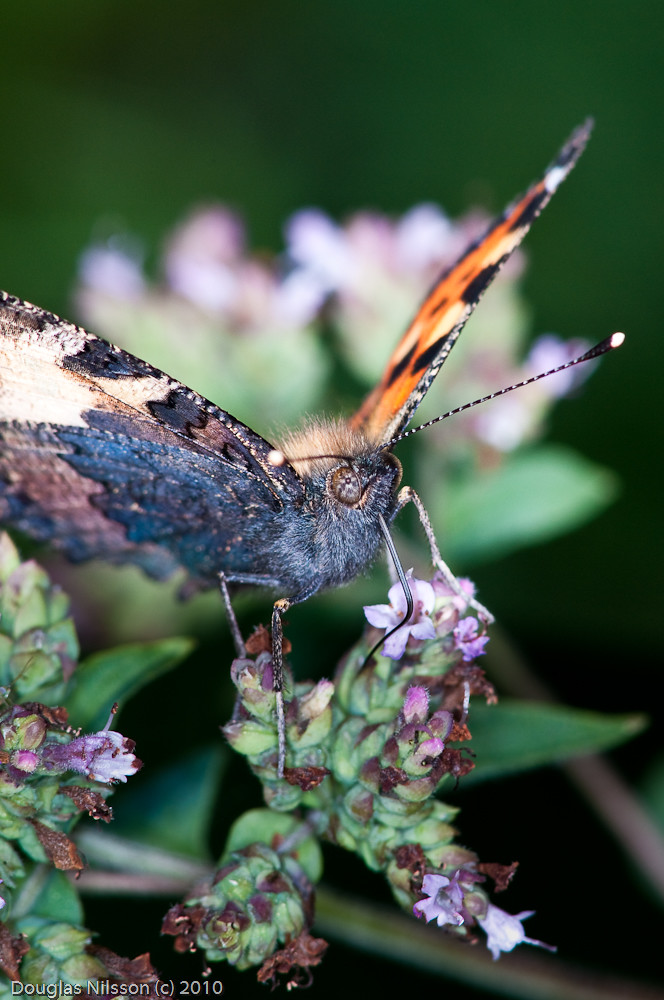

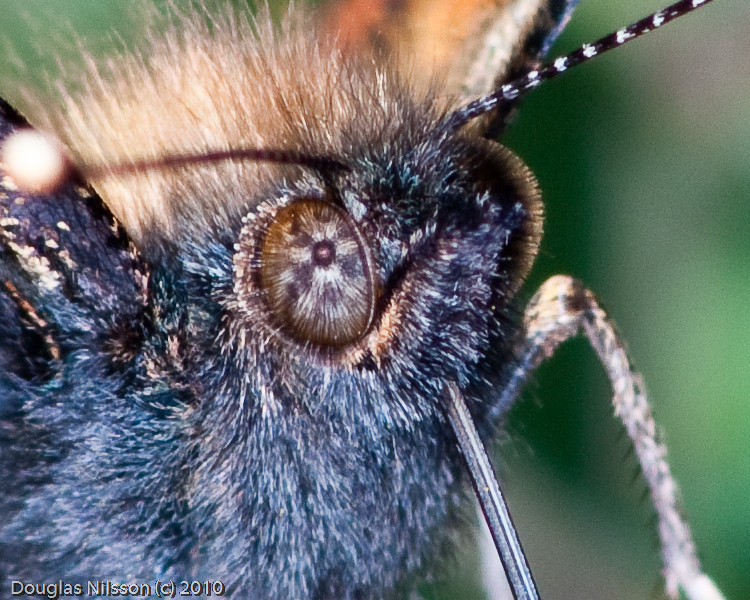
#6a Detail crop...look what details this lens is able to relieve!

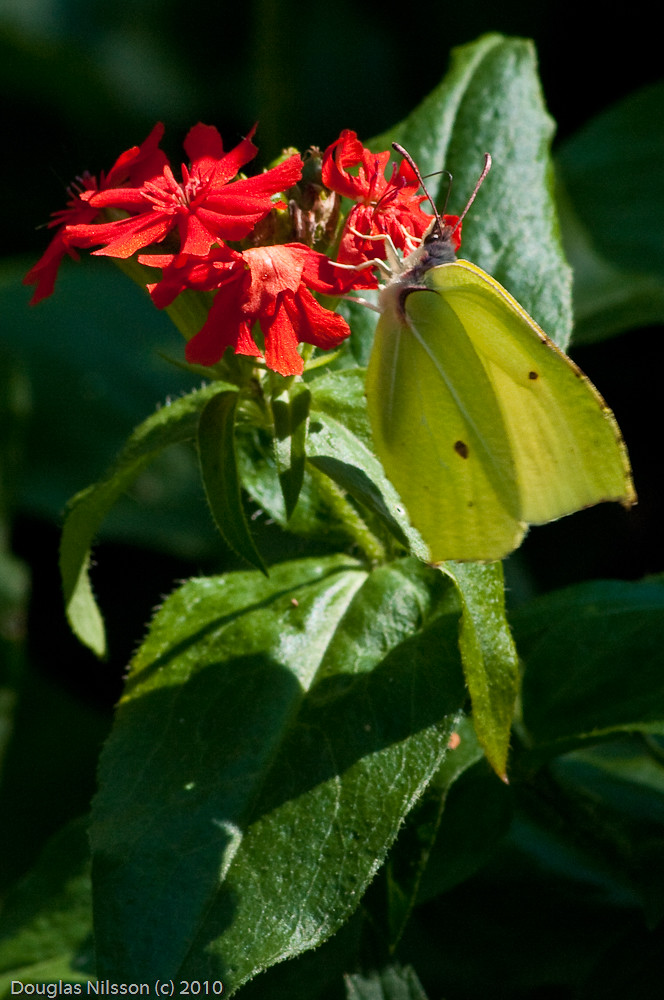
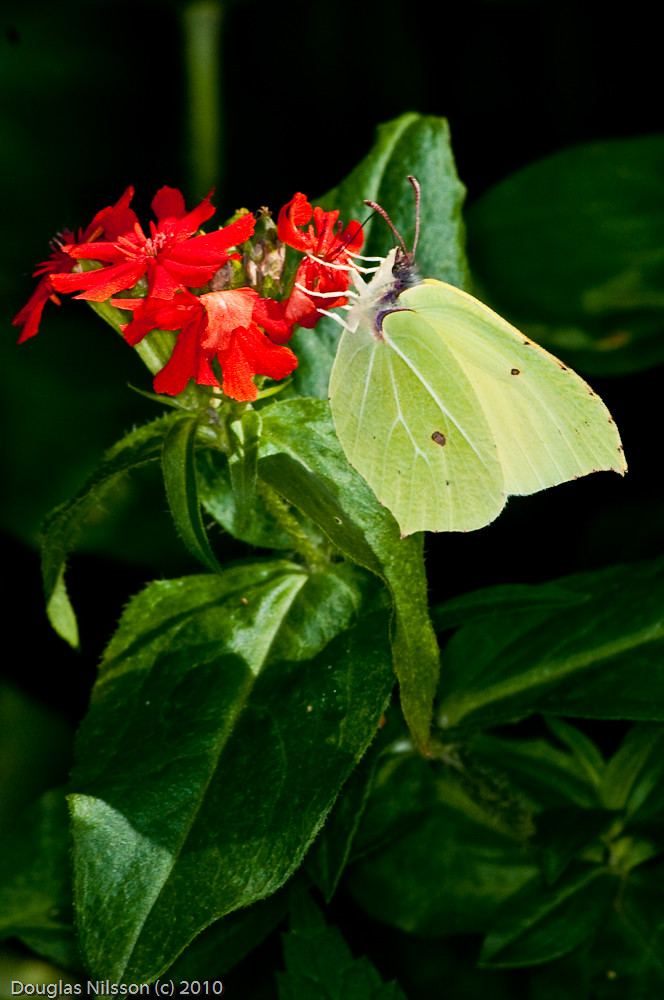
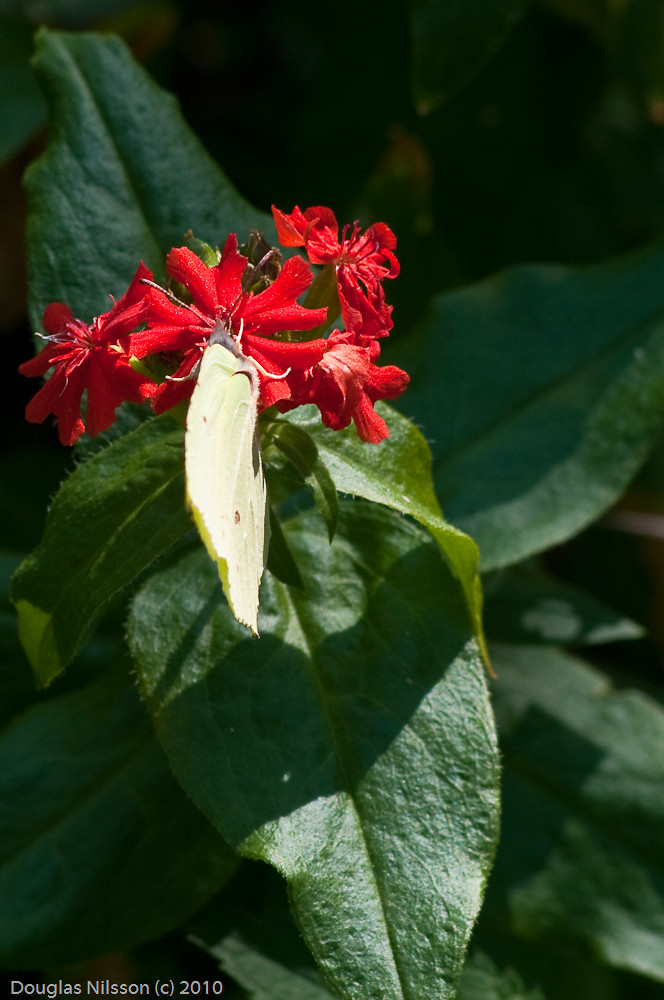
Next butterfly I think is called common brimmstone in Enlgish (citronfjäril på Svenska):

#7 Feeding on a Silene chalcedonica, without flash


#8 Dito with flash


#9 In difference to the tortoiseshell, it appears to have some sort of camouflage strategy and is not always easy to spot when it sits still with wings folded. And it is much more shy, at least the individuals I have here.

Finally (having fed itself on my cabbage) I've got a few cabbage butterflies, also called large white (?) (kålfjäril på Svenska):

#10 Feeding, apparently having the same taste as the tortoiseshell, preferring oregano
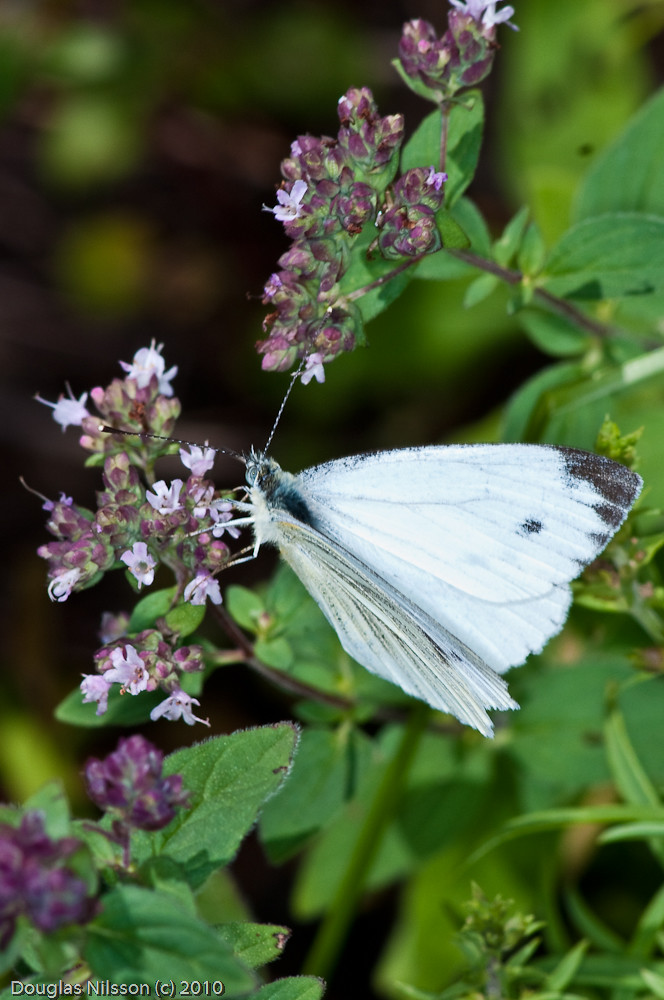

#11 Still feeding...what else is there to do as a butterfly...ops forgot about that...but I have not managed to shoot that activity yet

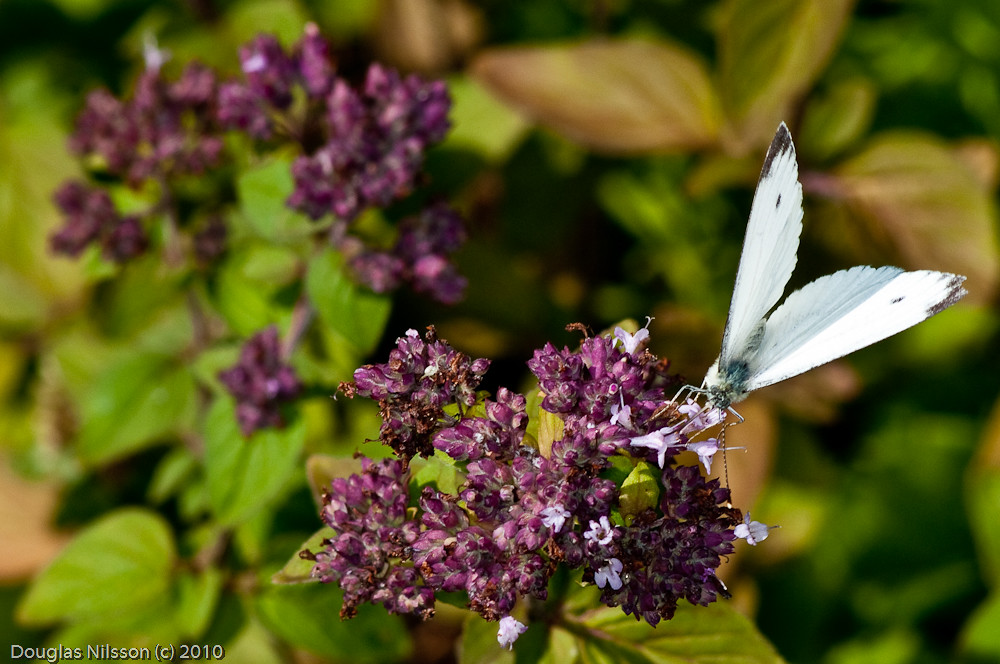
Appreachiating comments, and hope for advice from those with more experience on shooting relatively fast and shy bugs.
Views: 2,346
08-02-2010, 09:05 PM   #2
Site Supporter


Swede, I just love the first image. Great title for that image. JIM
08-02-2010, 09:36 PM   #3
Junior Member


Very nice. Looks like the lens is promising.

Which lens are you using (200mm 1:1)?

JB
08-03-2010, 12:12 AM   #4
Ash
Community Manager
Loyal Site Supporter


Not bad - some good ones there if the overexposure were corrected.
08-03-2010, 12:17 AM   #5
Pentaxian


Nice Douglas! nr 2, 4 and 11 is the best ones i think!
08-03-2010, 04:15 AM   #6
Moderator
Site Supporter


QuoteOriginally posted by Jimbo Quote
Swede, I just love the first image. Great title for that image. JIM
Thanks Jimbo! I'm very pleased with #1 myself. I think I will try to shoot more from below the butterflies. It gives a nice light and good chances to isolate them against the sky or distant vegatation rather then more close by vegetation. But it is of course not always possible. Took some patience to get into that position.

QuoteOriginally posted by Take-5-JB Quote
Very nice. Looks like the lens is promising.

Which lens are you using (200mm 1:1)?

JB
Thanks JB! Yes, I'm very happy with the lens.
It would have been nice if it had been the A*200mm macro, but it is not. It is not a Pentax lens. And it is not the 180mm Sigma that I've been waiting for forever. But it is the corresponding lens of another major SLR manufacturer, manual focus, of a dead camera mount. Those who read the "adapter"-thread should know.

QuoteOriginally posted by Ash Quote
Not bad - some good ones there if the overexposure were corrected.
Thanks Ash! I bet those you call overexposed are the ones where I've complained that the flash reflected so strongly in the pigments on the bottom side of the wings that meetering was fooled and they came out far brighter and with washed-out collors than in real world. I sort of gave up on them. Even if I corrected more of the overexposure I was not happy with colors and contrast.

QuoteOriginally posted by the swede Quote
Nice Douglas! nr 2, 4 and 11 is the best ones i think!
Thanks Swede. I notice you pick natural light shots.
Number 11 is one of my favs too. Background is quite bussy, but the bokeh came out smoth anyway and with warm nice colors against which the white of the butterfly contrasts nicely.

Thinking of ways to reduce the power of the flash (since the lens is manual, no A contactacts, I have to shoot it on manual flash) to mix natural and flash light, or build me some sort of diffusers for the ring flash elements. With flash I've shot on full power (with the Pentax AF160FC) but can reduce that but it will take more experimenting. For the natural light I've shot an Av at f8 or f11, stop down meetering.
08-03-2010, 05:38 AM   #7
Site Supporter


Well done and thanks for the detailed descriptions. Some of them are stunning , love the crop where they eyes are perfect.
08-03-2010, 12:25 PM   #8
Moderator
Site Supporter


QuoteOriginally posted by daacon Quote
Well done and thanks for the detailed descriptions. Some of them are stunning , love the crop where they eyes are perfect.
Thanks daacon! I wish someone who knew more about insect eyes could explain what we are actually seeing there. I've never managed to get such a good shot of a butterfly eye before.
08-03-2010, 03:54 PM   #9
Pentaxian


It must be a bit of a bugger hand holding a 200mm lens at 1:1. You did an excellent job all around.
08-04-2010, 10:16 AM   #10
Moderator
Site Supporter


QuoteOriginally posted by eccs19 Quote
It must be a bit of a bugger hand holding a 200mm lens at 1:1. You did an excellent job all around.
Not that hard actually. With the flash (and 1/180) I think I've got about 50% keepers in terms of sharpness and that accounts both for motion blurr and failed focus (it's a manual focus lens). Then of course pictures are less good for other reasons too. The Pentax SR is great!
Natural light and longer than 1/180 rapidly results in more failures.
I find it far more difficult to drag around a tripod when I'm shooting bugs that fly and are shy. Monopod, maybe, but since this is close to the ground in low vegetation, I'm mostly crawling anyway, and terra firma is a good stable support.

Zero keepers so far on flying or mating butterflies! How do people do that?
Reply

Bookmarks
  • Submit Thread to Facebook Facebook
  • Submit Thread to Twitter Twitter
  • Submit Thread to Digg Digg
Thread Tools Search this Thread
Search this Thread:

Advanced Search


Similar Threads
Thread Thread Starter Forum Replies Last Post
For Sale - Expired: DA L 50-200mm, 75-300mm, FA 28-200mm, Takumar-A 28-80mm Macro, ZX-M Body (U boiler Expired Listings 17 08-12-2010 07:19 AM
Butterflies with new K20D and sigma 70-300 Macro mccarvindh Post your photos! 3 04-30-2009 05:48 PM
Looking for suggestions on a macro Lens for butterflies and bees K10DJIM Pentax SLR Lens Discussion 9 12-08-2008 06:58 PM
flowers and butterflies in macro jeepinandcamping Post your photos! 2 02-03-2008 06:23 PM
Two mantis shots shot by A* 200mm macro and Voigtlander 125mm macro roentarre Pentax SLR Lens Discussion 7 12-04-2007 09:29 AM


All times are GMT -7. The time now is 05:27 AM.
  • Red (Default)
  • Green
  • Gray
  • Dark
  • Dark Yellow
  • Dark Blue
  • Old Red
  • Old Green
  • Old Gray
  • Dial-Up Style